

 DAY 3 PREVIEW
 Follow Us
A lead of 138 at the start of day two looked a distant task for England at one stage when they were reduced to 62 for five within the first hour of the day. However, scrappy bowling by India’s inexperienced bowlers let the momentum slip and the visitors ended up conceding a lead of 99 runs. The Indian openers had some nervy moments early in their innings, but they got to stumps unscathed.
India’s first agenda of the day would be to knock-off the 56-run deficit and they would accept with open arms if the openers cut it down without being separated. It will not only put India in command, but also assure the other batters that there are no demons in this pitch.
And there is every chance that the visitors might actually knock off the deficit without a blemish, for Rohit Sharma and KL Rahul have been the batsmen who have spent the most time at the crease this series for India.
Out of the total 3336 balls faced by India, Rohit and Rahul have played 40.2 percent of the balls and have scored 37 percent of the runs. This is a clear indication as to how the rest of the Indian batting line up hasn’t been up to the mark.
As a happy memory, if Rahul manages to replicate what he did in the 2018 tour at The Oval, India will be on high grounds. Not to forget, Rishabh Pant also chipped in with 114 in that innings alongside Rahul’s innings of 149. The pair put on a partnership of 204 for the sixth wicket. Though it was in the fourth innings, it will certainly be in the back of both the batters’ minds. Perhaps in the mind of the hosts too.
The good news for India is that, regardless of how their batters have played this series, batting gets better in the third innings at The Oval. The strip at The Oval has been the best wicket to bat in the third innings across all the venues in Tests since 2015 (Minimum five matches played). Teams batting have scored at an average of 35.8, a figure that is the second best among all venues in the aforementioned time frame. On average, teams have scored 321 runs at the Oval in the third innings.

A tale of two innings
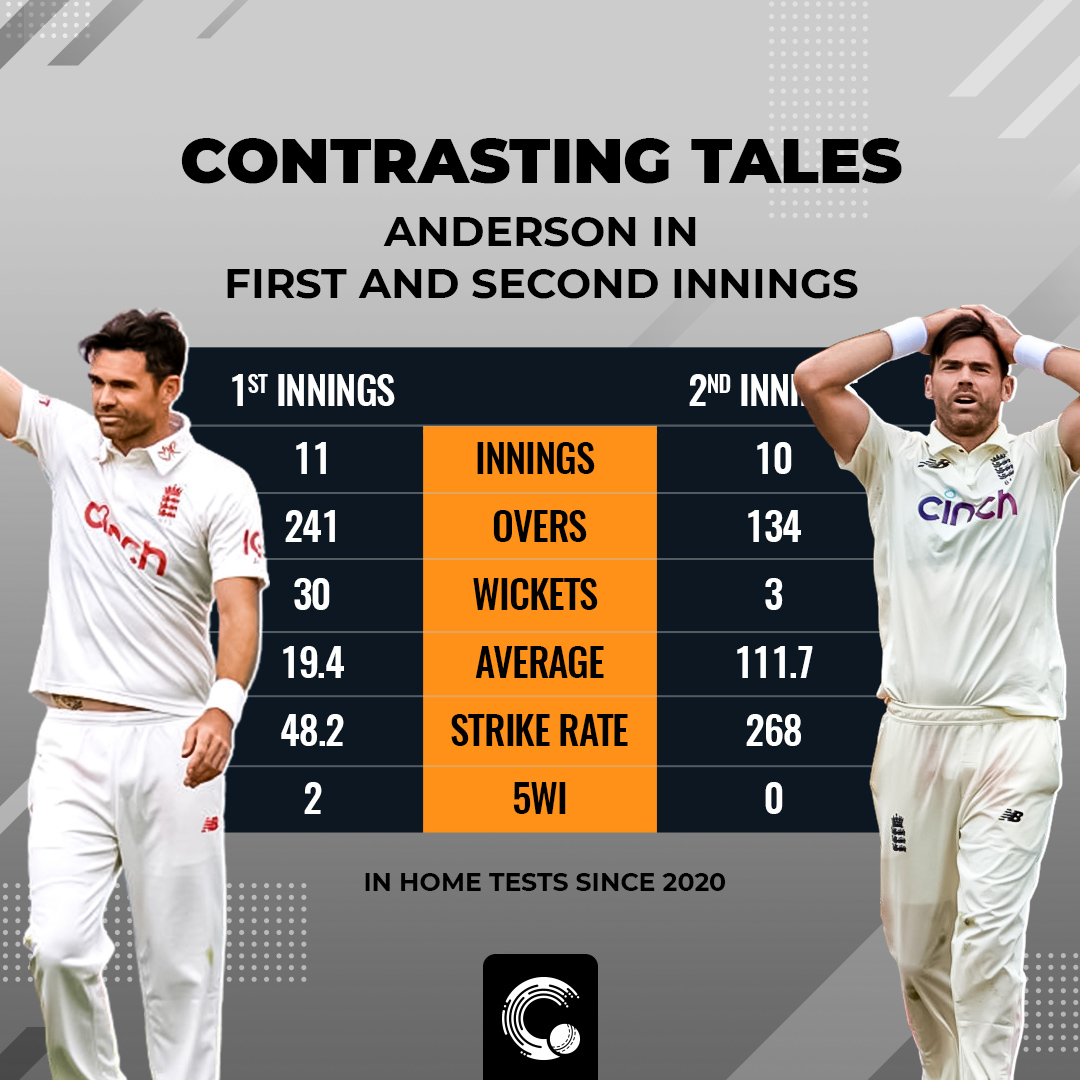
Another aspect that could potentially work in India’s favour is Jimmy Anderson’s surprisingly underwhelming showings in the second innings of matches, recently. In home Tests since 2020, Anderson has bagged 33 wickets at an average of 27.8 and strike rate of 68.1. Out of the 33 wickets, 30 have come in the first innings at a staggering average of 19.4 and a strike rate of 48.2. However, in the second innings, the numbers take a nosedive. In 10 innings, he has only taken three wickets at an average of 111.7 and a strike rate of 268.
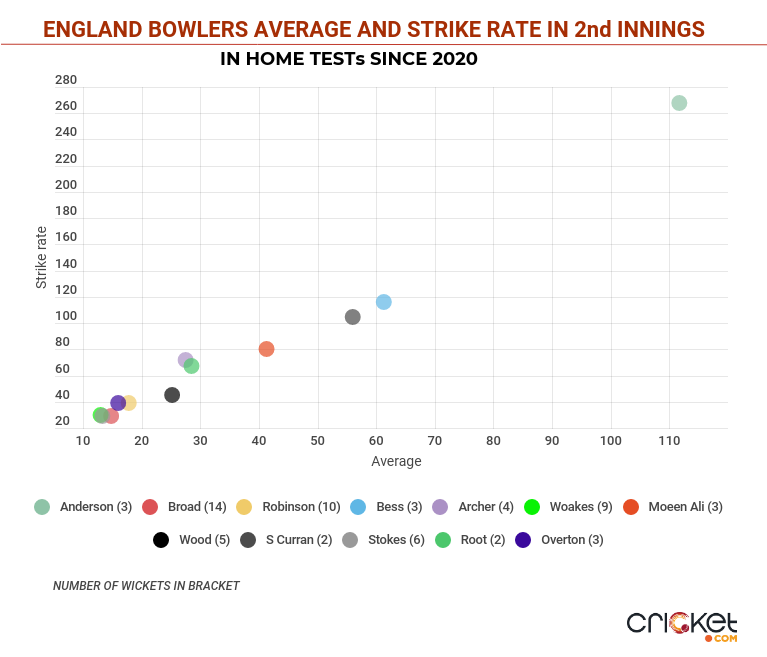
Shockingly, the senior pro has fallen behind each of his teammates. Among bowlers who have picked up at least two wickets in the second dig, Dom Bess has the second-worst average (61.3) and strike rate (116.3), but even his numbers are significantly better than that of the veteran. Overall, Anderson aside, the other English bowlers in total have bagged wickets at an average of 22.0 and a strike rate of 46 in the second innings.
 Anderson’s second-innings struggles should serve as a relief for the visitors. Though the rest of the bowlers are still a thorn in their path, a below-par showing from Anderson would give India huge breathing space. But there is one thing that could fall in the 39-year-old’s favour and that is the overhead conditions. The first few hours of the third day are expected to be cloudy, so write Anderson off at your own peril.